Date: 24.04.26
I attended one panel by Muslim writers
Sooooo one of my university assessments require me to attend a writer’s panel. Being a homebody who only leave the house in the morning even if I slept at 3 am last night, I was very limited in the events I could attend. Most, if not all writers’ events or book launch events are hosted 1-2 hours away by transportation at night. When I saw that there was a “Muslim Writers Festival” event, I knew I would attend to support my community and multicultural voices in Australia. The ticket was 30 a pop for one person, and I bought it online the night before… after binge watching documentaries about Afghanistan (I fell into a rabbit hole of hard drugs and dancer boys).
I was not very keen to go because I have work in the afternoon, so I could only attend 2 panels: one about Truth Telling and Aboriginality, the other was about faith. Title spoiler alert, I missed out on the first panel because I woke up late and apparently, it was really good and insightful. I AM ACTUALLY VERY DISAPPOINTED IN MYSELF! I didn’t even go to work that day, so I could have continued with the event in the afternoon. I actually had to fast for a test, and I was starving. I couldn’t change the past, but I still hold regret for not waking up earlier that day. Quick off tangent, but after the event I told my mum I went to a Muslim writer’s event and she said, “but you’re not Muslim, why did you attend?” Idk is it weird that I attended? I paid the ticket so I supported the organisation and it would be discriminatory to prohibit me from attending.
Speaking of the ticket, I entered the venue with no one checking if I had tickets to enter. The panel was specifically “At the Intersection of Faith, Art, Literature and Technology (AI)”, facilitated by Dr Nur Shkembi with speakers Amani Haydar, Peter Gould, Prof Mehmet Ozalp. I did find the conversation a bit confusing when Prof Ozalp and Gould talked about Islamic teachings (because I’m not Muslim). They talked about relating the Quran’s philosophy and teachings in their work, and Gould drawing inspiration from Islamic architecture. However, I found Haydar’s commentary on memories and history intriguing as her descriptive narrative and art of her hometown is now memorialised in her work as her hometown in Lebanon was bombed.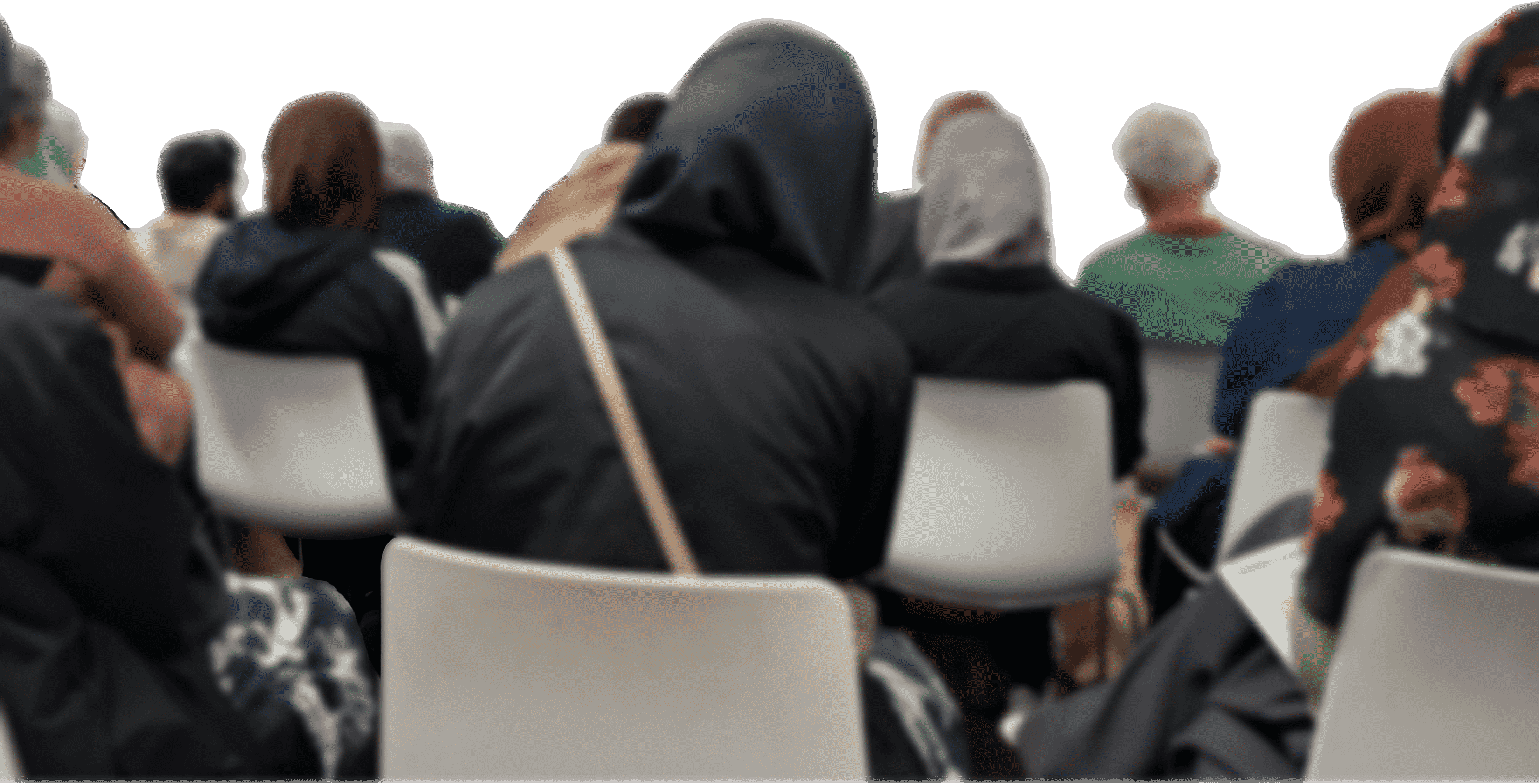 Pic I took during panel, blurred just in case.
Amani Haydar 1 is an Archibald Prize finalist with her novel “The Mother’s Wound”, which is a book about domestic violence, resilience, identity and loss 2 3. In the panel, Amani references this book and her process making of this novel and art. I wrote down some quotes that resonated with me, which I will provide and try my best to give context.
[Art is] not stagnant and meaning is added as time goes on
Amani Haydar talks about how her artworks and setting in the novel initially provide nostalgic and historical significance to her family. As time progresses, political conflict caused the destruction of her village, which added another layer of meaning to the original work. The audience’s own experience also provides further meaning making to her work, which was originally composed to tell her experiences.
Faith is a relatable framework
Amani Haydar when asked about how faith affected her creative process.
Stories are valuable; be the author of your own story
Amani Haydar is talking about agency of one’s own narrative. She talked about the fear for safety while writing her novel, but resonated with a quote “write like you’re dead”. Amani Haydar advice for future writers is to write your story first, then cut out info later. Your story is yours so speak your truth.
I really enjoyed Amani Haydar’s conversations in the panel; she shared great insights about her creative process. As mentioned, Prof Ozalp and Gould talked more about their faith, and unfortunately, I did not write down any quotes during their conversations. The panel wrapped up with a quick discussion about AI and writing, a great discussion about process as an important part of the end product, “AI rob our thinking” Gourd, and the unpredictable future of AI. The panellists imply (or maybe this is me projecting) AI steal from creatives, and reliance would create boring, predictable narratives.
The panel went overtime, and everyone went to pray while I rushed home. This was a great experience, and it is unfortunate that I did not stay until the afternoon and only attended one panel. Many events are not accessible or fit my schedule. I am unsure if I would be able to attend another panel or event. I will try to leave my house more, but it is not a guarantee.
- I’m not exactly sure whether or not to address Amani Haydar by her first or last name. Haydar is her father’s last name, as with many of our last names, which were taken from our paternal side. However, I want to show respect, which is often shown by addressing people by their last names and title.
- ABC News article (2021) "In The Mother Wound, Amani Haydar comes to grips with the insidiousness of domestic abuse"
- State Library of NSW interview (2021) "Q&A with Amani Haydar"